She Spoke, She Ruled, She Knew: Women in Vedic Thought
Were women really equal in Vedic times? Explore Vedic texts, Manusmriti, and ancient history to uncover the truth about women and dharma in Hindu tradition.
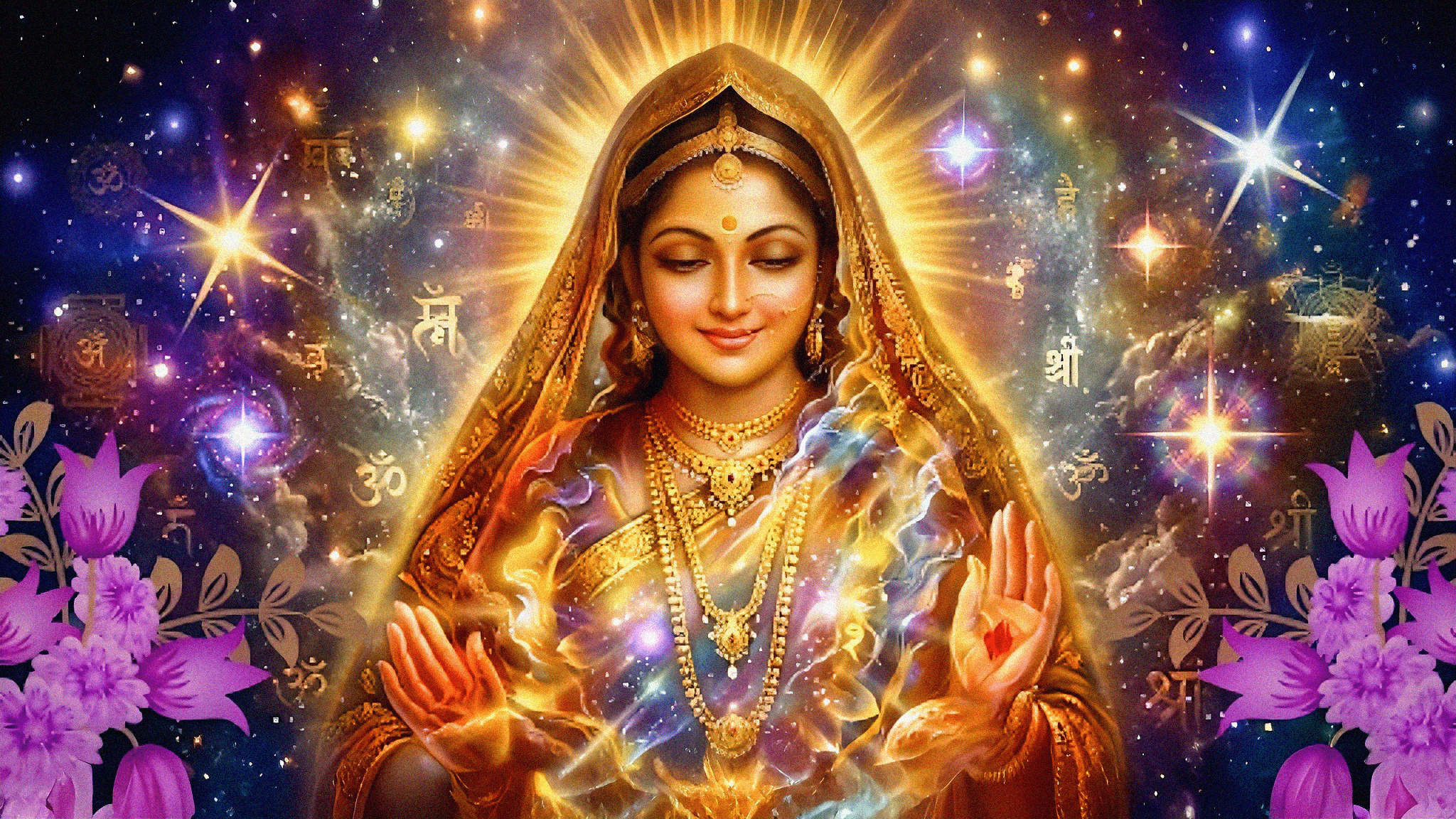
Author: Eshan Singh
9 min read
·Published: 22 March, 2026
A Simple Question
I have seen people worshipping the Mother during Navratri with full devotion. They call her Durga, Lakshmi, Saraswati. They say “Devi is everything.” But the same people also say that women are impure, that in Vedic times women were like goddesses but now they are not, and that is why women should not have equal rights. So I want to ask a simple question. If women in the Vedic age were Devi, then men were also Devas. Are you a Deva today?
The truth is simple. We are not living at that level today. So using that argument to restrict women does not make sense. Also, this is important. I am not saying women are superior to men or men are superior to women. Everyone has their own capabilities and their own duties. Dharma does not work on comparison. It works on balance.
And at the same time, no one should suppress women in the name of false ideas. And no one should also silence discussion with shallow arguments like “do you bleed?” or “you are impure.” Both sides miss the real point.
So let us look at what the texts actually say.
Women as Rishikas in the Vedas
In Vedic tradition, a Rishi is not defined by gender. A Rishi is someone who understands truth. As explained in Nirukta:
ऋषिर्दर्शनात्। स्तोमान् ददर्शति
It says “A Rishi is one who sees knowledge”. When we look into the Vedas, we find many women who are Rishikas. Lopamudra, Ghosha, Apala Atreyi, Vishvavara, Aditi, Indrani, Urvashi, Yami, Shraddha, Sarama, Romasha and many others are listed as mantra-drashta, the seers of Vedic hymns. Texts like Brihad Devata also list these women such as Ghosha, Godha, Vishvavara, Apala, Aditi, Indrani, Sarama, Lopamudra, Yami, Shashvati, Shraddha, Medha, Dakshina, Ratri and Surya Savitri as Brahmavadinis.
This shows clearly that women were not just listening. They were creating knowledge. One of the strongest examples comes from
अ॒हं के॒तुर॒हं मू॒र्धाहमु॒ग्रा वि॒वाच॑नी । ममेदनु॒ क्रतुं॒ पति॑: सेहा॒नाया॑ उ॒पाच॑रेत् ॥
Rigved 10.159.12 states “I am the one who awakens knowledge within the home. I am held in the highest regard, like the crown of the family. I am radiant and speak with distinct sweetness. My husband acts in harmony with my resolve, for I am the one who possesses great endurance.” Here, a woman speaks with full confidence. She describes herself as a force behind knowledge and power. She is not asking for respect. She is declaring her position. In these verses, the speaker identifies as a woman, yet the underlying message points to a Divine that is ultimately beyond gender.
Women in Philosophy and Debate
The confidence found in these Vedic verses translated directly into the public sphere, where women stood as equals in the most rigorous philosophical arenas of the time. They were active in every level of intellectual life. Gargi famously challenged the greatest minds in royal assemblies, while Maitreyi sought to understand the very nature of immortality. Figures like Lopamudra and Ghosha did not just study the Vedas, they contributed to them. Later, Ācāryā Ubhaya Bhāratī debated Adi Shankaracharya so profoundly that he had to pause the discussion and return only after further preparation. This history shows that women were never mere observers of knowledge; they were the ones shaping it. This inclusion is rooted in the universal nature of the scriptures themselves
यथे॒मां वाचं॑ कल्या॒णीमा॒वदा॑नि॒ जने॑भ्यः। ब्रह्मराजन्याभ्याँ शूद्राय॒ चार्या॑य च॒ स्वाय॒ चार॑णाय च। प्रि॒यो दे॒वानां॒ दक्षि॑णायै दा॒तुरि॒ह भू॑यासम॒यं मे॒ कामः॒ समृ॑ध्यता॒मुप॑ मा॒दो न॑मतु॥
As stated in, Yajurved 26.2: “O humankind! Just as I, the Divine, impart this auspicious and joy-giving speech, the knowledge of the four Vedas, to all people in this world: to the Brahman, the Kshatriya, the Vaishya, and the Shudra; to men and women alike; to family and servants; and even to those from the most distant or humble backgrounds. In the same way, all of you should share this knowledge with excellence.” This verse serves as a divine mandate for equality. It explicitly states that spiritual and intellectual wisdom is a gift for all of humanity, without exception. By listing every social class and specifically including both men and women, the text makes it clear that withholding knowledge based on birth or gender is contrary to the divine will. It reinforces the idea that the pursuit of truth is a collective journey for the entire human race.
Women as Teachers, Scholars and Can Attain the Highest Position
The influence of women in the Vedic tradition was a practical reality reflected throughout ancient society. Linguistic evidence in the Ashtadhyayi and Mahabhashya proves this,
आचार्यादणत्वं (आचार्यस्य स्त्री आचार्यानी पुंयोग इत्येवं आचार्या स्वयं व्याख्यात्री)
उपेत्याधीयतेऽस्या उपाध्यायी उपाध्याया
as specific titles like Ācāryā (Ashtadhyayi 4.1.19) and Upadhyayi (Mahabhashya 3.3.21) were created for female teachers. These words existed because women held these professional roles.
तयोर्ह मैत्रेयी ब्रह्मवादिनी बभूव स्त्रीप्रज्ञैव
In Shatapath Brahman 14.7.3.1, Maitreyi, the wife of sage Yagyavalkya, is called a Brahmavaadini. This authority reached the highest spiritual levels.
अथ केन ब्रह्मत्वं क्रियते इति त्रय्या विद्ययेति
The Shatapath and Aitareya Brahmanas (you can read all here) explain that the position of Brahma, the lead priest of a Yajna, is earned through Vedic knowledge, not gender.
अ॒धः प॑श्यस्व॒ मोपरि॑ संत॒रां पा॑द॒कौ ह॑र । मा ते॑ कशप्ल॒कौ दृ॑श॒न्त्स्त्री हि ब्र॒ह्मा ब॒भूवि॑थ ॥
The Rigved 8.33.19 confirms this, explicitly stating that a woman can attain that supreme position. The epics show these roles in action. In the Ramayan, women like Mother Tara and Mother Kaikeyi are called Mantrajna (knowers of mantras), while Mother Sita and Mother Kausalya performed their own daily rituals like Sandhyavandana and Agnihotra. Mother Anasuya even led efforts to end a national drought. In the Mahabharat, Mother Draupadi is honored as a Pandita who managed the administration of Indraprastha. These examples prove that women were never passive figures; they were the essential scholars, priests, and leaders of their time.
Women as Rulers and Warriors
When people talk about ancient Bharat, they often imagine women only inside homes. But when we actually read the texts, a very different picture appears. In the Mahabharat, women are not shown as weak or silent. They are strong, intelligent, and capable of taking responsibility in difficult situations.
The Mahabharat presents women as intellectually formidable and politically active. During Yudhishthira’s Rajasuya Yagna, the presence of various regional rulers included women who governed their own territories. This suggests that female sovereignty was a recognized and accepted norm. Royal women were systematically trained in diplomacy, alliances, and the strategic consequences of war.
In the Ramayan, Sati Anusuya is described as a force of nature who performed the work of a civil engineer by channeling the flow of the Mandakini River near the Chitrakoot region during a severe drought. We also see women connected to warfare and strategy in many ways. Royal women were trained in statecraft, diplomacy, and sometimes even in the use of weapons. They understood alliances, war decisions, and political consequences.
If we look beyond the Ramayan and Mahabharat, the same pattern continues in history. There were rulers like Rani Chennabhairadevi, who ruled for more than five decades and resisted Portuguese expansion. This was not symbolic authority. It was real power over land, trade, and defense. Even foreign observers like Domingo Paes, who visited the Vijayanagara Empire, recorded that women were involved in activities like wrestling and handling weapons. Scientists like E. K. Janaki Ammal, worked on sugarcane genetics and helped improve Bharatiye agriculture. Her work helped make Bharat more self-reliant.
Manusmriti and Its Context
The Manusmriti exists in different versions and has changed over time, so it should be understood carefully and in the light of Vedic principles. There is also a view that during periods of foreign rule, including some Islamic regimes and later British rule, the text may have been altered or selectively interpreted. Because of this, today people often remember only a few controversial lines and ignore the rest.
यथैवात्मा तथा पुत्रः पुत्रेण दुहिता समा । तस्यामात्मनि तिष्ठन्त्यां कथमन्यो धनं हरेत्
When we look at the full text, many verses clearly support respect for women. Manusmriti 3.55 says women should be kept happy, 3.57 says families collapse when women suffer, and 3.62 says family happiness depends on women. The famous 3.56, connects respect for women with prosperity. Manusmriti 9.96 shows that husband and wife perform dharma together. Other verses like 9.12, 9.130–131, 2.138, and 3.114 talk about strength, property rights, priority, and care for women.
This creates a clear point. On one side, the text strongly supports dignity and well-being of women, while some other lines seem contradictory. If Maharishi Manu had truly been against women, then we would not see strong examples of learned, powerful, and respected women even up to the time of the Mahabharat. So when read properly, Manusmriti shows that the respect and well-being of women are central to a healthy society.
A Comparison with Other Traditions
The Vedic examples we have seen so far may feel surprising today. But they become even more striking when we place them next to how other parts of the world treated women and knowledge. During the European witch trials, women who had knowledge of healing or independent thinking were sometimes feared and punished. In Christianity, positions like the Pope have traditionally been limited to men. In Islamic traditions, the role of Imam in formal congregational leadership is also reserved for men. Each tradition has its own system and structure. But what stands out in Vedic literature is that authority is based on knowledge, not gender. A woman is not only allowed to learn and teach but can even attain the position of Brahma, the highest priest in a yajna.
The Core Idea of Dharma (Righteousness)
At its core, dharma is not about favoritism or blind belief. Almighty does not interfere randomly or choose sides. Karma decides the results of our actions. Faith, in this sense, does not mean sitting quietly and expecting things to change. It means doing your duty honestly, standing for truth even when it is difficult, and having the courage to act. Dharma is practical and action-based. It expects responsibility, not passivity.
Final Thought
When we look across the Vedas, Brahmans, the Valmiki Ramayan, the Mahabharat, historical records, and even modern examples, one clear pattern appears. Women were never limited to a single role. They were Rishikas, teachers, philosophers, administrators, rulers, and scientists. Vedic dharma does not define a person by gender but by knowledge, action, and discipline. Once this is understood, the conclusion becomes simple. Respect for women is not just a social idea. It is a basic foundation of dharma itself. I wanted to write more and include even more references, but that would have made this blog too long. If anything here felt incorrect or harsh, I ask you to read it with an open mind and pardon any mistakes.