Devraj Indra: The Misunderstood King of Devas
While reading the Ramayan, I noticed instances where Maharishi Valmiki compared Lord Ram and Lakshman with Lord Indra and Lord Vishnu. This made me think deeply. If Indra was really as cowardly and characterless as people say today, then why would Maharishi Valmiki use his example while describing Lord Ram? That question stayed in my mind and made me look deeper into the real image of Devraj Indra. In this blog, let us try to understand that forgotten side of his character.
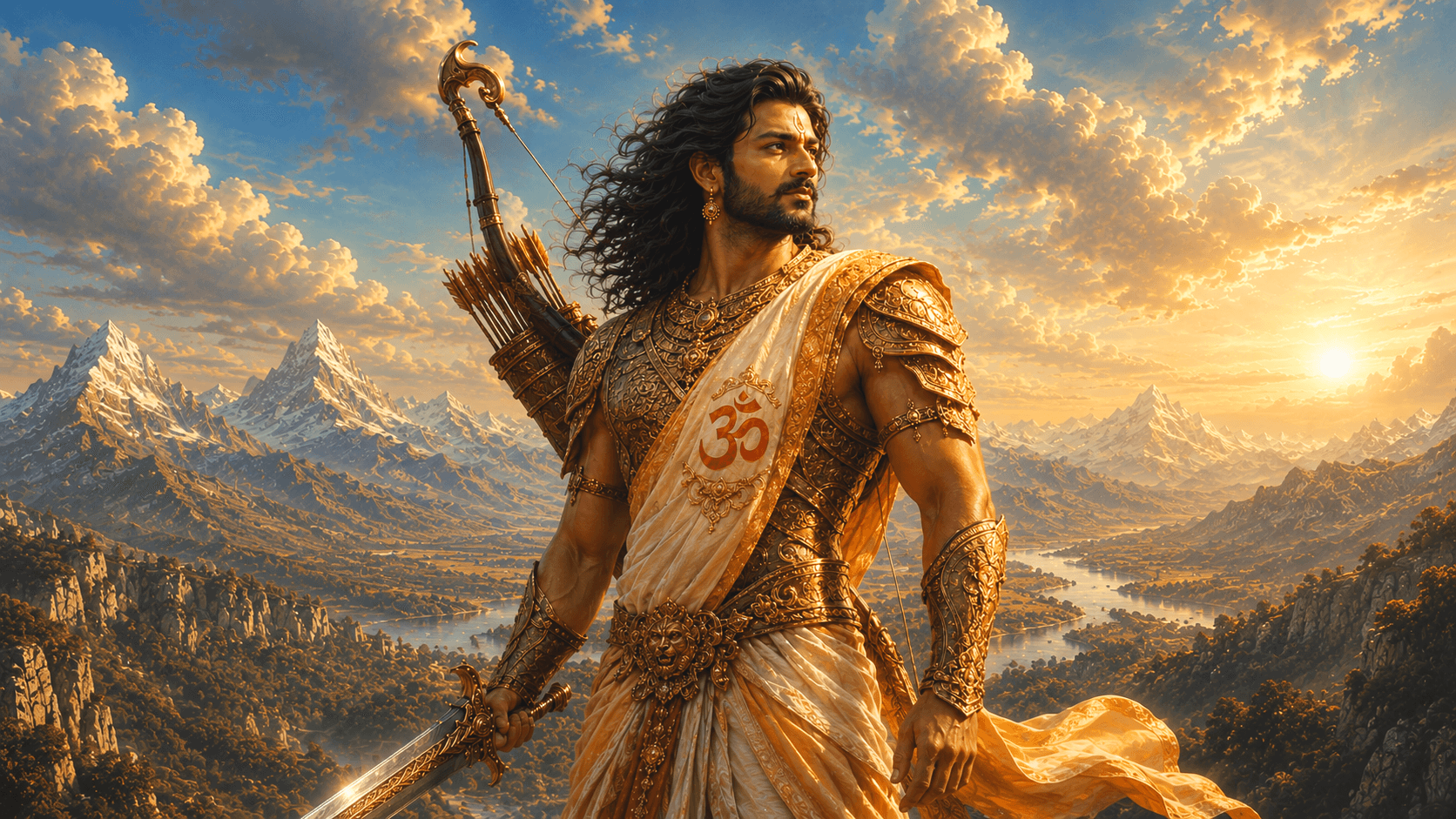
Author: Eshan Singh
5 min read
·Published: 30 May, 2026
I have noticed a pattern in how we Hindus talk about many of our own gods and rishis. From Lord Shiva to Lord Krishna, and even great scholars, their image is often changed through fake stories, wrong interpretations, movies, and serials. I found the same thing with Devraj Indra. Like many people, I also believed that Indra was egoistic, characterless, and cowardly because that is how he is usually portrayed.
What is the meaning of Indra
अग्न॒ इन्द्र॒ वरु॑ण॒ मित्र॒ देवाः॒ शर्धः॒ प्र य॑न्त॒ मारु॑तो॒त वि॑ष्णो। उ॒भा नास॑त्या रु॒द्रो अध॒ ग्नाः पू॒षा भगः॒ सर॑स्वती जुषन्त
Vedic mantras such as Rigved 5.46.2, Atharvaved 11.6.1, and many other references show how widely the word “Indra” was used in Vedic thought. In fact, Indra is one of the most frequently used names in the Vedas. Different rishis and commentators used the word “Indra” in many meanings such as king, leader, owner, mind, sun, fire, and supreme controller depending on the context of the mantra. Even the word “Indriya” comes from Indra, which refers to the senses that are controlled by the mind. This shows that the term “Indra” is a symbol of power, control, leadership, and consciousness in Vedic philosophy.
Who was Devraj Indra
यथा वरेण देवानामदितिर्वज्रपाणिना
Valmiki Ramayan gives important references regarding the greatness and lineage of Devraj Indra. Ayodhya Kaand 1.8 states that Lord Indra was the son of Mother Aditi and Maharishi Kashyap.
ततोराक्षसशार्दूलोविद्राव्यहरिवाहिनीम् । स ददर्शततोरामंतिष्ठन्तमपराजितम् ।। लक्ष्मणेनसहभ्रात्राविष्णुनावासवंयथा । अलिखन्तमिवाकाशमवष्टभ्यमहद्धनुः ।। पद्मपत्रविशालाक्षंदीर्घबाहुमरिन्दमम् ।
Later, in Yuddh Kaand 6.100.11–13, Maharishi Valmiki compares Lord Ram and Lakshman with Lord Vishnu and Lord Indra, highlighting the immense respect accorded to Indra’s character, leadership, and warrior qualities. Traditional commentaries also describe Lord Indra as the elder brother of Lord Vishnu through their shared birth as Adityas (sons of Mother Aditi).
अभयं सत्त्वसंशुद्धिर्ज्ञानयोगव्यवस्थिति: | दानं दमश्च यज्ञश्च स्वाध्यायस्तप आर्जवम् | अहिंसा सत्यमक्रोधस्त्याग: शान्तिरपैशुनम् | दया भूतेष्वलोलुप्त्वं मार्दवं ह्रीरचापलम् तेज: क्षमा धृति: शौचमद्रोहोनातिमानिता | भवन्ति सम्पदं दैवीमभिजातस्य भारत
To understand what truly defines a divine being or Deva, we can look to the criteria laid out in the Bhagavad Gita 16.1–3. There, Lord Krishna explains person possessing qualities such as fearlessness, purity of mind, self-control, truthfulness, discipline, compassion, humility, austerity, mastery over the senses, and absence of arrogance considered to have a divine nature.
यथा सुरपतिः शक्र
Later, Mahabharat 6.79.27 refers to Lord Indra as the king of the Devas, further emphasizing the supreme position and respect he held in the epic era.
Fake stories around Devraj
Chandogya Upanishad 8.7.3 says that Lord Indra did intense tapasya and remained in brahmacharya for more than 33 years to attain spiritual knowledge.
तौ ह द्वात्रिंशतं वर्षाणि ब्रह्मचर्यमूषतुस्तौ ह प्रजापतिरुवाच किमिच्छन्तावास्तमिति तौ होचतुर्य आत्मापहतपाप्मा विजरो विमृत्युर्विशोको विजिघत्सोऽपिपासः सत्यकामः सत्यसंकल्पः सोऽन्वेष्टव्यः स विजिज्ञासितव्यः स सर्वांश्च लोकानाप्नोति सर्वांश्च कामान्यस्तमात्मानमनुविद्य विजानातीति भगवतो वचो वेदयन्ते तमिच्छन्ताववास्तमिति
This itself shows how much self-control and discipline he had. Then later stories started showing Indra as a lustful person through the Ahalya episode. But if we refer to Shatapath Brahman 3.3.4.1–31, interpreters viewed Ahalya as unploughed land, Indra as rain and fertility, and Gautam as an ascetic or solar principle. In this interpretation, Ahalya represents dry infertile land and Indra comes to make it fertile. It is possible that later literal stories were mixed with this symbolic meaning and slowly changed the image of Devraj Indra.
Why Indra is called Sahasrākṣa
If the Ahalya story was originally symbolic or metaphorical, then many people ask why Lord Indra was later called Sahasrākṣa, the one with a thousand eyes. Popular stories claim that Rishi Gautam cursed Indra after the Ahalya incident and thousands of female marks appeared on his body which were later turned into eyes. But honestly, this sounds more like a later fairy tale addition than a philosophical or Vedic explanation. Also, intellectually, this reads more like a later Puranic exaggeration or literalized folklore than a core philosophical explanation. Sometimes common sense is also important while understanding ancient stories.
इन्द्रस्य हि मन्त्रिपरिषदीनां सहस्रम् आसीत् । स तच्चक्षुः । तस्मादिन्द्रः सहस्राक्षः ।
To understand the original meaning of Sahasrākṣa, we can refer to Kautilya Arthashastra 1.15.55 where it is mentioned that Lord Indra had thousands of learned ministers and observers in his kingdom who acted like his eyes. Because of this vast network of wise ministers and intelligence, people started calling him Sahasrākṣa, meaning “the thousand-eyed one.”
Conclusion
Devraj Indra is far more than the flawed, diminished figure that popular culture has made him out to be. From the Vedas to the Upanishads, from Valmiki's Ramayan to Kautilya's Arthashastra, the original sources consistently present him as a disciplined, spiritually evolved, and administratively wise king. The Ahalya episode, so often used to define his entire character, likely has deeper symbolic roots that were gradually replaced by literal retellings. The epithet Sahasrākṣa itself, when understood correctly, speaks not of a curse but of extraordinary governance and intelligence. As Hindus, it is our responsibility to approach our own scriptures with curiosity and discernment rather than accepting distorted narratives at face value. Devraj Indra deserves to be remembered the way Maharishi Valmiki and other Rishis remembered him, as a figure worthy of comparison with Lord Ram or Krishna himself.