Mahānayak Arjun: The Most Misunderstood Warrior of Mahābhārat
In this blog, you'll discover the true character of Arjun as described in the original Sanskrit shlokas of the Mahābhārat, without the influence of modern TV serials or later portrayals that glorify Karna or Duryodhan. Through detailed references and logical analysis, this article examines Arjun's birth, childhood struggles, unmatched skills, and the discipline, humility, and commitment to Dharma that shaped his life. You'll learn why Guru Dronacharya chose Arjun over the other princes, how he observed brahmacharya, and how he defeated powerful warriors, including Karna, in actual battles. Rather than relying on fantasy or the idea of divine favoritism, this blog presents Arjun as a real human being who faced hardships, worked tirelessly, and achieved victory through tapasya, loyalty, inner strength, and unwavering dedication.
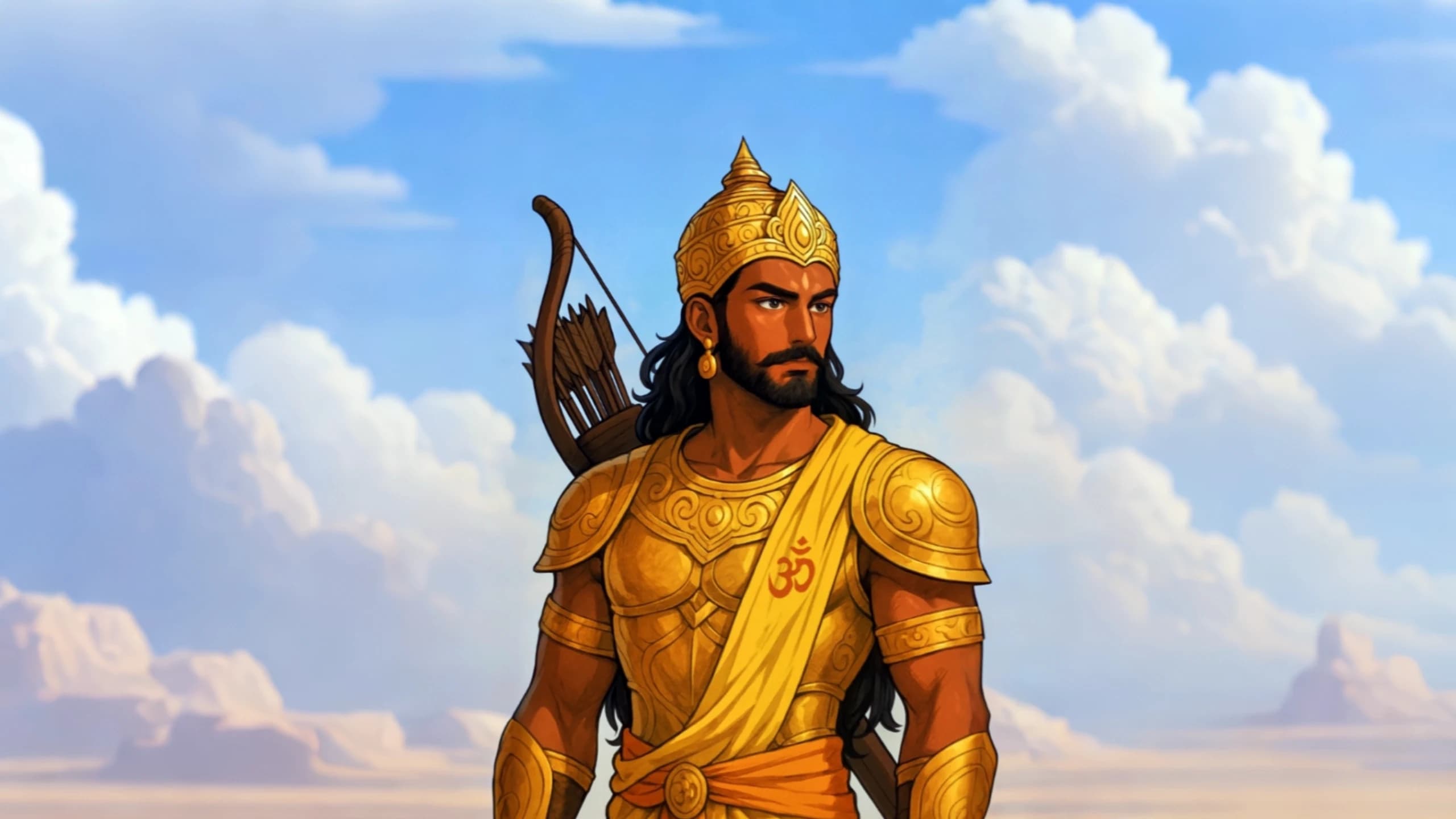
Author: Eshan Singh
14 min read
·Published: 12 April, 2025
In today’s time, the Mahābhārat is perhaps the only epic where both the story and its noble characters have been twisted and portrayed in such an unfair and negative way, something that has rarely happened with any other religious or historical text. India has always been known for its noble heroes, yet for some reason, there seems to be a continuous effort to insult them, especially through TV shows and modern storytellers.
That is why people from other ideologies point fingers at us and make claims such as, “Your religion promotes caste discrimination, black magic, and unfair treatment.” The truth, however, is that these things were never part of our original culture.
According to this perspective, since the Mughal period, changing and twisting our scriptures became increasingly common. Ideas such as the caste system, untouchability, and even disturbing practices like pedophilia were inserted because their own ‘idols’ or heroes were associated with such acts. They did not want future generations to question them, so they altered our texts to make it appear as though we too had idols who discriminated, objectified women, and committed similar wrongs.
Adding to this, some selfish people in positions of power helped these invaders simply to protect their own thrones. This has continued ever since, sometimes in the name of showing miracles, and at other times disguised as poetic creativity.
People often forget that invaders always wanted to break our unity, and sadly, they succeeded to a great extent. Not many know about Lord Macaulay, who destroyed our ancient education system, interpolated our texts, and made Indians think like the British. Rulers such as Khilji attacked the foundations of our culture and knowledge. As a result, many people today have forgotten our true heroes and instead celebrate the wrong ones.
Whenever someone tries to speak the truth, people respond by saying, “You are spreading hate.” And when they are encouraged to read the real history, they reply, “No, if we read it, we’ll start hating people.”
But the truth is simple. Any person or country that forgets its real history and Dharma only walks toward destruction.
In recent times, modern television serials and popular narratives have glorified characters like Karna and Duryodhana while portraying Arjun in a diminished light. Many people believe that Arjun was nothing without Lord Krishna, and that Karna was the greater warrior. However, a careful reading of the Mahābhārat presents a very different picture, one of struggle, discipline, loyalty, and unmatched martial skill. This blog aims to reveal the real Arjun through authentic scriptural references and logical analysis while setting aside later interpolations, fictional additions, and mythical exaggerations such as divine births.
The Truth About Arjun's Birth
सा बल वरता देवी धमायोपजहार ह । जजाप वधवजयं दं वाससा पुरा
The Mahābhārat, Adi Parva (122) has a popular story says that Mother Kunti called powerful gods by chanting a special mantra after performing tapasya (deep prayer). If this really happened, then today we should also be able to invoke gods through mantras and have children from them. Since that does not happen today, it is reasonable to question whether this account should be understood literally. However, if we read it as poetic symbolism, it may suggest that Mother Kunti had her children through the ancient practice of niyog, a system in which a childless woman could have a child through another man. But there is a difficulty with this interpretation as well. Niyog was generally permitted only with close blood relatives during that period. Also, the Mahābhārat uses the word “samagam” (physical meeting), which I personally believe is a later interpolation and was not part of the original text.
In my understanding, just as people today may choose a suitable father or sperm donor through IVF to have a child, it is possible that in those times great and noble men were chosen to serve as donors so that a family line could continue. Since King Pandu could not have children, and the mantra given by Maharishi Durvasa may have represented guidance rather than a supernatural act, he may have served a role similar to that of a doctor or guide, helping Kunti and Pandu use an ancient equivalent of IVF to have children. From this perspective, the story may be rooted in a real event that was later expressed in a poetic or symbolic form.
एवमुक्ता ततः शक्रमाजुहाव यशस्विनी । अथाजगाम देवेन्द्रो जनयामास चार्जुनम् उत्तराभ्यां तु पूर्वाभ्यां फल्गुनीभ्यां ततो दिवा । जातस्तु फाल्गुने मासि तेनासौ फाल्गुनः स्मृतः । जातमात्रे कुमारे तु वागुवाचाशरीरिणी ॥
According to Mahābhārat, Adi Parva (122.35-36), When King Pandu gave his permission, the noble Mother Kunti used the divine mantra to invoke a deity. In response, Lord Indra, the king of the gods, appeared and blessed her with a son, Arjun.
This event took place during the lunar month of Phalguna (roughly corresponding to February–March in the Gregorian calendar), at the time of sunset. At that moment, the Moon was transitioning between two powerful star zones in the sky. One was ruled by Venus, symbolizing beauty, strength, and charm, while the other was ruled by the Sun, representing clarity, duty, and honor.
These celestial zones are known in Vedic astrology as nakshatras. During this twilight period, the Moon was moving from a Venus-ruled nakshatra in Leo to a Sun-ruled nakshatra in Virgo. Because the child was born in the month of Phalguna and under the influence of the Phalguni nakshatras, he was also given the name Phalguna.
This beautifully reflects the depth of our ancient wisdom, where birth timings were carefully calculated from the precise positions of the stars and planets.
स सुप्तां मातरं दृष्टवा भ्रातृंश्च वसुधातले । भृशं शोकपरीतात्मा विललाप वृकोदरः ॥
Arjun’s Childhood Struggles and Loyalty
तस्य कामात्मनो बुद्धि: साक्षात् कालेन मोहिता । सम्प्रमथ्येन्द्रियग्रामं प्रणष्टा सह चेतसा ।। दारकेष्वप्रमत्ता च भवेथाश्च हिता मम । अतोऽन्यन्न प्रपश्यामि संदेष्टव्यं हि किंचन ।।
Although Arjun was born into royalty as the son of King Pandu and Queen Kunti, his early life was far from the luxury one might expect of a prince. At a very young age, Arjun lost his father Pandu, and the responsibility of raising five sons fell entirely upon his mother, Kunti (Mahābhārat, Adi Parva 124.11-30). This loss not only deprived Arjun of paternal guidance but also exposed him early on to the challenges of life without protection or power. His formative years were marked by intense hardship, uncertainty, and constant threat—all born from the jealousy and hostility of Duryodhana and his supporters.
ततः सुबलपुत्रस्तु राजा दुर्योधनश्चह। दुःशासनश्च कर्णश्च दुष्टं मन्त्रममन्त्रयन् ।। ते कौरव्यमनुज्ञाप्य धृतराष्ट्रं नराधिपम्। दहने तु सपुत्रायाः कुन्त्या बुद्धिमकारयन् ।।
According to Mahābhārat, Adi Parva (140-150), when the Kauravas' envy of the Pandavas reached its peak, they hatched a cruel conspiracy to burn the Pandavas alive inside the Lakshagriha—a palace built of lac and other flammable materials. Arjun, still a young boy then, had to flee this planned assassination along with his brothers and mother.
तत्र भैक्षं समाजहुर्ब्राह्मणीं वृत्तिमाश्रिताः । तान् सम्प्राप्तांस्तथा वीराञ्जज्ञिरे न नराः क्वचित् ॥
They lived in disguise, hiding their true identities to survive among commoners, mendicants, and forest dwellers.
Even amidst such hardship, Arjun never deviated from the path of Dharma. Whether wandering in forests or hiding in unknown cities, his focus remained on serving righteousness and protecting his family. He did not indulge in blame or despair, nor did he seek shortcuts to reclaim the throne. His strength lay in endurance, loyalty, and humility.
Years later, during the exile after the dice-game defeat, Arjun endured immense personal hardship. He undertook solitary pilgrimages and penance, including obtaining divine weapons through tapasya, not out of ambition, but to fulfill his role in restoring Dharma.
During the Agyatvaas (incognito exile), Arjun again demonstrated remarkable humility and discipline. Living in the court of King Virat as Brihannala, a eunuch dance teacher, he concealed his warrior identity and bore the humiliation of a lowly status. This was not weakness—it was supreme inner strength, the ability to subordinate ego for the sake of a greater cause.
Through all these phases, Arjun stood firm—never abandoning Dharma, never betraying his family, and never allowing personal pride to overpower righteousness.
Such unwavering commitment—despite loss, exile, disguise, and insult—made Arjun not only the greatest archer but a living embodiment of Dharma in adversity. Long before the battlefield of Kurukshetra, he had already proven his worth through sacrifice, discipline, and devotion.
The Ideal Disciple
We have always heard that Guru Dronacharya was biased—that he neither taught Karna nor Eklavya and that he focused only on Arjun, giving him everything. But have we ever tried to find out the truth?
अभ्ययात् स ततो द्रोणं धनुर्वेदचिकीर्षया । शिक्षाभुजबलोद्योगैस्तेषु सर्वेषु पाण्डवः । अस्त्रविद्यानुरागाच्च विशिष्टोऽभवदर्जुनः ॥ तुल्येष्वस्त्रप्रयोगेषु लाघवे सौष्ठवेषु च । सर्वेषामेव शिष्याणां बभूवाभ्यधिकोऽर्जुनः ॥
A disciple like Arjun is born once in a thousand years—someone who obeys every word of his guru, is eager to learn every lesson, and practices the taught skills repeatedly with full dedication. When a student is like that, any teacher would naturally be affectionate toward him (Mahābhārat, Adi Parva 131). *Note: Please read this chapter Mahābhārat, Adi Parva 131.
वृष्णयश्चान्धकाश्चैव नानादेश्याश्च पार्थिवाः । सूतपुत्रश्च राधेयो गुरुं द्रोणमियात् तदा ।।
On the other hand, there were disciples like Karna (Mahābhārat, Adi Parva 131.11). Due to not following the vow of brahmacharya (celibacy and discipline), Guru Drona did not teach him the Brahmastra Vidya. So Karna left him and went to Guru Parashurama by lying about his identity to obtain that knowledge.
Brahmacharya
Unlike Karna and other warriors, Arjun practiced strict celibacy and self-restraint during his exile. He visited holy places, performed penance, and gained spiritual strength through inner discipline, which later helped him remain calm and sharp in battle.
अभिवादये त्वां शिरसा प्रवराप्सरसां वरे। किमाज्ञापयसे देवि प्रेष्यस्तेऽहमुपस्थितः ॥ यथा कुन्ती महाभागा यथेन्द्राणी शची मम । तथा त्वमपि कल्याणि नात्र कार्या विचारणा।
In the Mahābhārat, Van Parva 46.20-38, we see a profound example of Arjun’s exceptional character. The celestial apsara Urvashi, renowned for her unparalleled beauty, approaches Arjun with desire. She tries to seduce him, overwhelmed by his valor and charm. But Arjun, despite being a young warrior in exile, remains firm in his values.
He humbly addresses Urvashi as “Mother,” remembering her past connection with his ancestors, and touches her feet in reverence. Urvashi becomes angry at being rejected, but Arjun’s response reflects his deep commitment to Brahmacharya and dharma. This moment reveals the strength of Arjun’s inner discipline—resisting even heavenly temptation out of respect, self-control, and righteousness.
इत्युक्त्वा संजहारास्त्रं पुनरेवं धनंजयः । संहारो दुष्करस्तस्य देवैरपि हि संयुगे ।। विसृष्टस्य रणे तस्य परमास्त्रस्य संग्रहे । अशक्त: पाण्डवादन्यः साक्षादपि शतक्रतुः ॥ अचीर्णब्रह्मचर्यो यः सृष्ट्वा वर्तयते पुनः । तदस्त्रं सानुबन्धस्य मूर्धानं तस्य कृन्तति ॥
According to the Mahābhārat, Sauptik Parva 15.5-10, when Ashwatthama unleashed the powerful Brahmastra, Arjun too released his own Brahmastra to counter it. However, upon the instruction of Maharishi Krishna Dwaipayana (Ved Vyasa), Arjun successfully withdrew his divine weapon. Withdrawing a celestial weapon once released is no simple task—it is said to be extremely difficult even for Lord Indra himself.
Only a true Brahmachari (celibate) and a Jitendriya (one who has complete control over his senses) can perform such a feat. Otherwise, the divine weapon would turn against its own wielder. This incident is just one of the many examples in the Mahābhārata that highlight Arjun's unwavering character, his strict discipline, and the power of his Brahmacharya.
An undefeatable warrior, who never lost a single war
TV serials often portray that without Shri Krishna, Arjun would not have won any battle—that he succeeded only because of the help of the gods. They present Karna as greater and braver than Arjun, claiming he gave away his divine armor and was killed unfairly while unarmed, and that otherwise, he would have surely defeated Arjun.
But let us turn to the actual Mahābhārat and explore the truth for ourselves. Let’s examine the real valor, skill, and character of Arjun as described in the original epic—not through modern dramatization, but through scriptural evidence.
स समर्थोऽपि मोक्षाय शिष्यान् सर्वानचोदयत् । ग्राहं हत्वा मोक्षयध्वं मामिति त्वरयन्निव ॥
Mahābhārat, Adi Parv 132.13-17, From a young age, Arjun’s bravery was unmatched. Once, Guru Drona staged a test where he pretended to be caught by a crocodile and cried for help. While all the princes, including Karna, stood watching in confusion, Arjun swiftly drew five arrows, mounted them on his bow, and tore the crocodile to pieces, saving his Guru.
श्रुतं च मे महाराज युद्धे धनुष्मता पुरा। अर्चितो भगवान्देवः स्थाणुर्दशविधात्मकः॥ स कपर्दी स्वयं देवो धनञ्जयेन संयुगे। किरातवेषधारी च युद्धाय समुपस्थितः॥ तत्र लोकपालाः सर्वे धनुर्धरमुपागताः। ददुस्तस्मै धनुर्वीर्यं नान्यं पश्याम्यहं नरम्॥ योऽर्जुनं युद्धे जेष्येन्न महेश्वरमप्यहम्॥
Sanjay said: "Except for Lord Mahadev (Shiva), there is no one who can defeat Arjun in battle."
पाञ्चालस्य रथस्येषामाप्लुत्य सहसापतत् । पाञ्चालरथमास्थाय अवित्रस्तो धनंजयः ॥ विक्षोभ्याम्भोनिधिं पार्थस्तं नागमिव सोऽग्रहीत्। ततस्तु सर्वपाञ्चाला विद्रवन्ति दिशो दश ॥
In the battle at Panchal, where Karna and Duryodhan were captured and badly beaten, the valiant Arjun defeated King Drupad.
भो भो: फाल्गुन तुष्टोऽस्मि कर्मणाप्रतिमेन ते। शौर्येणानेन धृत्या च क्षत्रियो नास्ति ते समः ॥ समं तेजश्च वीर्यं च ममाद्य तव चानघ। प्रीतस्तेऽहं महाबाहो पश्य मां भरतर्षभ ॥
According to the Mahābhārat, Van Parva 39.68-71, Arjun fought a fierce battle with Lord Shiva, pleased him, and received the Pashupatastra. Shiva told him, "In strength, you are equal to me, and defeating you in battle is impossible."
There are many such descriptions of Arjun's valor throughout the Mahābhārat. In every single battle, Arjun remained undefeated. As for Karna, in all the battles between them—whether it was the Gandharva war, the Virat war, or others—Karna either fled the battlefield or broke down in fear.
Karna's death
अस्यतां फाल्गुनः श्रेष्ठो गाण्डीवं धनुषां बरम्। केशवः सर्वभूतानामायुधानां सुदर्शनम् ॥ वानरो रोचमानश्च केतु: केतुमतां वरः ।
Many people claim that even with the presence of Shri Krishna and Lord Hanuman, Karna was able to push Arjun's chariot backward, and that Arjun killed Karna unfairly. However, according to the Mahābhārat, there was no actual Hanuman sitting on Arjun's chariot. It bore the Kapi Dhwaja (monkey banner), along with several other symbolic emblems. Therefore, this popular claim is not supported by the text.
As for the accusation that Arjun killed Karna through deceit, let us examine what the Mahābhārat itself says.
तत् समीक्ष्य ततः कर्णा ब्रह्मास्त्रेण धनंजयम् । अभ्यवर्षत् पुनर्यत्नमकरोद् रथसर्जने ॥ शरोत्तमेनाञ्जलिकेन राजं-स्तदा महास्त्रप्रतिमन्त्रितेन। पार्थोऽपराह्ले शिर उच्चकर्त वैकर्तनस्याथ महेन्द्रसूनुः ॥
According to the Mahābhārat, Karna Parva 91.20–60, Karna began attacking Arjun by showering him with arrows using the Brahmastra. Contrary to popular belief, the Mahābhārat does not state that Karna forgot how to use this weapon. During the battle, when Karna found an opportunity, he stepped down to lift the wheel of his chariot. At that very moment, Arjun countered Karna's Brahmastra with his own and then used the Anjalika Astra to sever Karna's head from his body.
So, neither warrior was unarmed. The popular narrative that Karna was completely helpless at the time of his death is, a later interpretation used to glorify a character despite the account given in the Mahābhārat.
Conclusion
In a time when history is often retold to suit convenience or a particular agenda, it becomes our responsibility to seek the truth through the lens of Dharma and authentic scriptures. Arjun was not merely a great archer who depended on Krishna. He was the embodiment of discipline, loyalty, and righteousness, qualities that are rarely given the attention they deserve in many popular retellings today. His life was shaped not by privilege, but by relentless hardships, difficult moral choices, and an unwavering commitment to Dharma, even when he had to live in disguise, endure insults, or face isolation.
The modern glorification of Karna and Duryodhana often comes at the cost of overlooking Arjun's sacrifices, his deep devotion to his family, and his steadfast moral character. By returning to original sources such as the Mahābhārat, instead of relying on later interpolations or sensationalized media portrayals, we discover a hero who earned every victory through struggle, discipline, and perseverance rather than shortcuts.
Arjun's story is not just a chapter from ancient history. It is a timeless reminder of what it means to stand for truth, remain humble despite great power, and become a warrior of the inner self. Let us move beyond distorted portrayals and honor the heroes who lived for Dharma rather than personal praise. By understanding Arjun as he is presented in the original tradition, we also reconnect with an important part of our own civilizational heritage and take a step toward rediscovering the values that shaped it.